Authenticity
Described as found
A vintage watch is an old object, and old objects rarely arrive with a complete account of themselves. This page sets out how Ebbrow approaches that: plainly, and without claiming more than can be said.
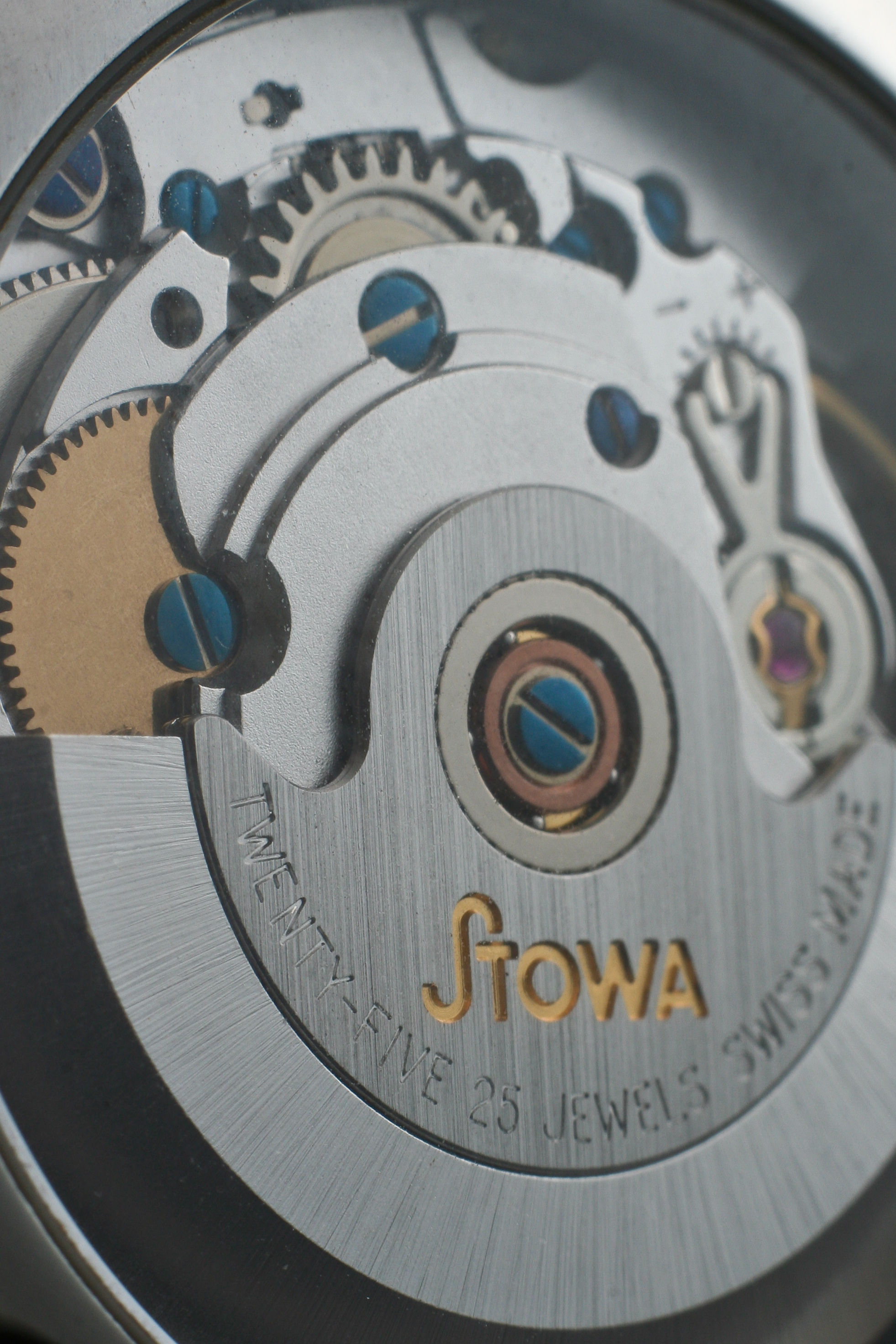
Photograph: Stowa Antea ETA 2824 macro by Guy Sie, CC BY-SA 2.0. A bare movement, shown as atmosphere, not as Ebbrow stock.
Our principles
What we hold to
01
Individual pieces
Every watch is a single object with its own characteristics, wear and marks of age. No two are the same.
02
Accurate descriptions
A listing should communicate the condition observed and the identifying details available, and no more than that.
03
Known and unknown, apart
What is known about a watch is set out. What is not known is left as not known, rather than implied.
04
Read, then ask
The listing is the account of a watch. If something is unclear, ask before you buy.
Honest limits
What cannot always be known
The history of a vintage watch is often incomplete. A full record of its owners, its servicing or its origins may simply not exist, or may not be available.
Where such details are not established, a listing does not suggest otherwise. The absence of a detail is not a statement that it is good or bad; it means only that it is not known.
Wear, replacement parts, refinishing and past repairs are common in watches of this age, and are not always visible or documented. A description reflects what has been observed, not an account of everything a watch has been through.
Before you buy
Reading a listing
Read the individual listing in full: the description, the condition notes and the images. Treat them as the record of what is known about that watch.
If a detail matters to you and is not stated, treat it as not established, and ask about it before purchasing.
Continue
Look closely
Begin with the collections, or read the Journal on how to look at a vintage watch.